Search
  • Visit
    • Get Tickets
    • Visit
    • Digital Guide
    • Frequently Asked Questions
    • Directions
    • Groups
    • Stay
    • Eat
    • Accessibility
    • Courtesy Code
    • On Campus
  • Events
  • Exhibitions
    • Current
    • Upcoming
    • Long-Term
    • Sound Art
    • Sol LeWitt
    • Anselm Kiefer
    • Past Exhibitions
  • Performing Arts
    • Upcoming Performances
    • MASS MoCA Records
    • Past Performances
  • Public Programs
    • Public Programs
    • Kidspace
    • Education
    • Teens
    • Camp Mass MoCA
  • Residencies
    • The Studios at MASS MoCA
    • Resident Artists
  • About
    • About
    • 2024–2030 Strategic Plan
    • Leadership
    • Commitment to Community Values, People & Place
    • History
    • Press Room
    • Jobs & Opportunities
    • Host Event / Rent Space
    • Land
    • Contact
  • Shop
    • Online Gift Shop
    • Research & Development Store
  • Join/Give
    • Give Now
    • Become a Member
    • Host Event / Rent Space
Search
START TYPING AND PRESS ENTER TO SEARCH
  • Visit
    • Get Tickets
    • Visit
    • Digital Guide
    • Frequently Asked Questions
    • Directions
    • Groups
    • Stay
    • Eat
    • Accessibility
    • Courtesy Code
    • On Campus
  • Events
  • Exhibitions
    • Current
    • Upcoming
    • Long-Term
    • Sound Art
    • Sol LeWitt
    • Anselm Kiefer
    • Past Exhibitions
  • Performing Arts
    • Upcoming Performances
    • MASS MoCA Records
    • Past Performances
  • Public Programs
    • Public Programs
    • Kidspace
    • Education
    • Teens
    • Camp Mass MoCA
  • Residencies
    • The Studios at MASS MoCA
    • Resident Artists
  • About
    • About
    • 2024–2030 Strategic Plan
    • Leadership
    • Commitment to Community Values, People & Place
    • History
    • Press Room
    • Jobs & Opportunities
    • Host Event / Rent Space
    • Land
    • Contact
  • Shop
    • Online Gift Shop
    • Research & Development Store
  • Join/Give
    • Give Now
    • Become a Member
    • Host Event / Rent Space

Spatial Poems: Cecilia Vicuña, Sam Frésquez, and Lola Ayisha Ogbara

On view Beginning May 23, 2026 – April 4, 2027
In Conversation: Artists and Curators of Spatial Poems May 23, 2026 at 4pm

Member & Artist Opening Reception May 23, 2026 at 5:30pm
Press Images

North Adams, MA, March 19, 2026 – MASS MoCA is pleased to present Spatial Poems, a communal exhibition in three concurrent parts developed by CEI Fellow Marissa Del Toro in collaboration with guest curators Ninabah Winton and Jamillah Hinson. The exhibition features the work of artists Cecilia Vicuña, Lola Ayisha Ogbara, and Sam Frésquez. 

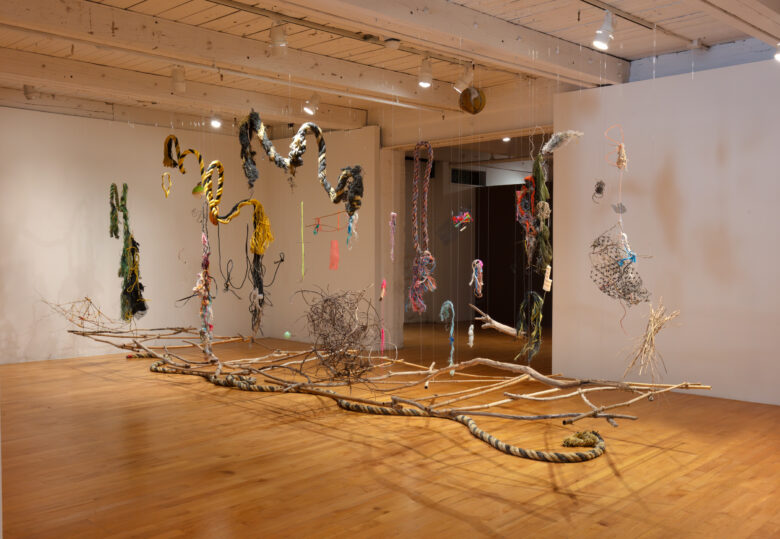
Cecilia Vicuña’s ‘precarios’ – a series of multidisciplinary works composed in part of sculptures made out of debris and in part collective rituals of dissonant sound – serve as the overarching conceptual framework for the three interrelated projects, with curators and artists responding to the many themes Vicuña’s works evoke. The artists and artworks explore ephemerality, memory, and cyclical repetition through a range of materials and compositional approaches.

Together, the exhibitions can be understood as a score or spatial poem, created by curators and artists working in a euphonious rhythm. Spatial Poems inspires a dialogue on care, social relations, and the organization of new forms of being and processes as an act of refusal to the current precaritization of the art world.

“When I was first invited to participate in the Curatorial Exchange Initiative, I knew that I wanted to invite other curators to take part in this opportunity,” says Del Toro. “My proposal for Spatial Poems was conceived from a space of care and collaboration, and my belief that working with others creates something unique that could not be envisioned alone. The works showcased in this exhibition exemplify this ethos, and build off of one another to create a whole that has a meaning beyond the sum of its parts.” 

Cecilia Vicuña: union of three, curated by Del Toro herself, is rooted in Vicuña’s 60-year art practice of ‘precarios’ or ‘Arte Precario’—small assemblages made from discarded and fragmented materials conceptually foregrounded in ephemerality, intangibility, and evanescence. Born in 1948 in Santiago, Chile, and based in New York City, the pioneering visual artist, poet, filmmaker, and activist has focused on various political issues, from the fascist Pinochet era of Chile to the present environmental destruction. Cecilia Vicuña: union of three presents a selection of ‘precario’ and quipu sculptures, including her monumental Quipu Desaparecido 2 / Disappeared Quipu 2 (2018) and Balsa Snake Raft to Escape the Flood (2017), alongside films, texts, and sound

Lola Ayisha Ogbara: Scars Insist on Being Remembered, curated by Jamillah Hinson in collaboration with Del Toro, is an exercise in care that explores Black movement, veneration, and sonic experimentation, presented through imagined geographies and naturally forming archives rooted in the artistic and cultural traditions of post-structuralism in Black American and African diasporic communities. With a conceptual practice standing at the intersection of non-Western epistemologies and bodily topographies, Ogbara explores the philosophical poetics of the scar as both a visual language of fugitivity and an imprint of resistance through material and compositional investigations.

Sam Frésquez: * curated by Ninabah Winton, invites viewers into a dreamlike exploration of nested realities — a literal and metaphorical journey through time, memory, and intergenerational knowledge. Beginning with a life-sized kitchen that visitors can physically enter, the installation unfolds as a sequence of six increasingly miniaturized versions of the same space. Each contains meticulously crafted furnishings that shrink proportionally until reaching the smallest room, which is merely inches tall. This recursive architectural experience creates a visual tunnel that allows viewers to contemplate the compression and expansion of lived histories

About the Artists: 

Cecilia Vicuña
Cecilia Vicuña (b. 1948 in Santiago, Chile; lives and works in New York, NY and Santiago, Chile) integrates practices of poetry, performance, Conceptualism, and textile craft in response to pressing concerns of the modern world, including ecological destruction, human rights, and cultural homogenization. Born and raised in Santiago, she was exiled during the early 1970s after the violent military coup against President Salvador Allende. This sense of impermanence, and a desire to preserve and pay tribute to the indigenous history and culture of Chile, have characterized her work throughout her career.

Lola Ayisha Ogbara
Lola Ayisha Ogbara is a Nigerian American conceptual artist from Chicago, Illinois. Her practice explores the haptic sub/conscious, racialized voyeurism, and transcendental sonic experiments. Ogbara has exhibited in art spaces nationwide, including Split My Sides, The Luminary, St. Louis, MO (2020); Skin + Masks III, Kavi Gupta + EXPO Chicago, Chicago, IL (2023); Kemper Museum, Fairyland, Mindy Solomon Gallery, Miami, FL (2021); and Kristen Lorello Gallery. She has also received residencies, fellowships, and awards from Alfred University, Arts + Public Life at the University of Chicago, the Coney Family Fund, the Chicago Department of Cultural Affairs & Special Events, and many more. She has earned a BA from Columbia College Chicago and an MFA from Washington University, Sam Fox School of Art and Design in St. Louis, MO.

Sam Frésquez
Sam Frésquez (she/they) was born in Mesa, Arizona. Frésquez currently lives and works in New Haven, Connecticut. Frésquez received her MFA in Sculpture at Yale in 2025 and her BFA from Arizona State University in Intermedia Art in 2019. Most recently, she was included in Get In The Game: Sports, Art, and Culture at SFMoMA, which will go on to travel to the Perez Art Museum in Miami and Crystal Bridges Museum of American Art in Arkansas. They have participated in numerous residency programs, including Xico Galeria (2017), Haystack Mountain School of Craft (2019), New York Arts Practicum (2019), Vermont Studio Center (2019), MASS MoCA Assets for Artists (2019), and CALA Alliance (2022). Along with her work, she shares a collaborative practice with Merryn Omotayo Alaka entitled Hairland (2017-present). Lisa Sette Gallery represents Frésquez.

About the Curatorial Exchange Initiative Spatial Poems, curated by fellow Melissa Del Toro, is part of MASS MoCA’s Curatorial Exchange Initiative (CEI), an exploratory pilot for how contemporary museums work collaboratively with curators and artists, whose diverse practices and knowledge can be exchanged, supported, and deepened. CEI invited six fellows, including independent and institutionally-based curators working in the United States and Puerto Rico, to realize curatorial projects at MASS MoCA the first of which, Steve Locke: the fire next time, was curated by Evan Garza (August 3, 2024 – November 8, 2025), followed by Zora J Murff: RACE/HUSTLE, curated by Terence Washington (December 6, 2025 – Winter 2026). As part of the program, CEI fellows receive the support of MASS MoCA’s curators, art fabrication and public programs teams, and with other key staff to realize exhibitions that will be mounted at, and supported through, MASS MoCA over the next five years. Among the defining features of the fellowship is its emphasis on curatorial exchange — intellectual, experiential, cultural, interpersonal, and institutional. MASS MoCA provides direct support for research, travel, residency, and commission/studio time for the artists each fellow is working with, and an annual stipend for the fellows that spans a two to three year period. The three additional CEI fellows are Ryan N. Dennis, Michy Marxuach, and Risa Puleo. 

About MASS MoCA

MASS MoCA is a contemporary art museum that emphasizes bold creative exploration and fosters surprising connections between people every single day. It upholds artistic freedom and is an indispensable home for artists who stretch toward what has yet to be created. From its beginnings as the major textile mill Arnold Print Works in the mid-19th century, to its days as the Sprague Electric Company in the mid-20th century, to its current existence as a globally renowned, contemporary art museum and fabrication center, the MASS MoCA campus has a rich history of serving as an economic engine of the City of North Adams and the surrounding region. With vast galleries, artist studios and a variety of indoor and outdoor stages, MASS MoCA is able to embrace art in all forms. For more information visit massmoca.org or follow on Instagram at @massmoca.

For more information, please contact:
MASS MoCA Communications Team
press@massmoca.org

Kim Donica, kd@kimdonica.com

Download the press release here.

MASS MoCA’s Curatorial Exchange Initiative (CEI) is generously supported through a leadership gift from Sarah Arison and the Arison Arts Foundation, Michi Jigarjian, Denise Sobel, the Teiger Foundation, and Anders Schroeder. Additional support is provided by the Director’s Catalyst Fund, with generous contributions from Greg and Anne Avis, Kelly and Bill Kaiser, Steve and Lisa Jenks, Bob Gold, and an anonymous donor.


On view November 7, 2026 – January 16, 2028
Opening Preview Reception November 7, 5:30pm
Press Images

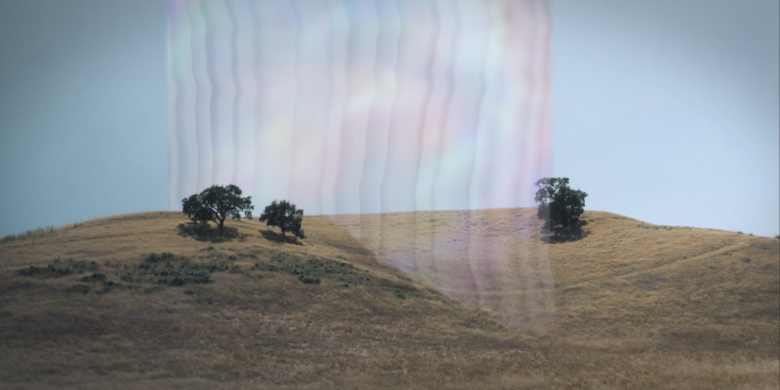
North Adams, MA, January 15, 2026 —In November 2026, MASS MoCA will present Metaphysical Maze, the largest exhibition to date in the United States devoted to French conceptual artist Laurent Grasso. Installed in the museum’s iconic Building 5, Metaphysical Maze will take the form of an immersive installation bringing together, for the first time, the artist’s most emblematic films, along with a new commission in progress, Cosmic Drive, produced during his research residency at the SETI Institute in Mountain View, California.

Conceived as a journey, the exhibition immerses visitors in a contemplative state that expands the perception of time. The installation extends beyond the realm of film to include new works — paintings, sculptures, and architectural interventions — forming a whole. In Grasso’s universe, all lines are blurred: artworks are presented without specific titles, dates, or identifying labels. Within the exhibition time appears suspended, unfolding a carefully orchestrated environment. “Entering my exhibition,” says the artist, “is like walking into a forest — an imaginary landscape where you wander without trying to identify every species of tree.”

“This project has been ten years in the making,” notes Denise Markonish, former MASS MoCA Chief Curator and now Martin Friedman Chief Curator at Madison Square Park. “I first presented Grasso’s work at MASS MoCA in Explode Every Day: An Inquiry into the Phenomena of Wonder (2016-2017), and since then we’ve been in dialogue about how to bring his expansive vision to Building 5. I’m thrilled that MASS MoCA’s audiences will encounter such a wide range of his work — it will truly be an exhibition filled with wonder.”

Using three cross-shaped structures specially designed to span the length of the former industrial space, Grasso transforms the vast gallery into a machine of vision. These structures draw inspiration from Sol LeWitt’s geometric works which are on view in his A Wall Drawing Retrospective installed in MASS MoCA’s adjacent gallery and establish a dialogue between the two spaces.

Grasso further enriches these structures – which will be home to films and accompanying artworks – by rotating them 45 degrees so that, as visitors move through the space, they evoke the hands of a clock. Their walls become the projection surfaces for his films and the circular movement of visitors reinforces the impression of being inside a living mechanism of time, creating an experience that evokes time travel — a theme Grasso has explored throughout his career. This is further enhanced by the ways in which Grasso alters the space to evoke invisible energies. Gallery windows, sealed with metal panels, appear to have been marked by unknown radiation. And sound permeates throughout the space creating layers that merge into a continuous presence. These soundtracks include contributions from his collaborations including Warren Ellis (Nick Cave and the Bad Seeds) and Nicolas Godin (Air). 

“Beyond the layers of detail in Grasso’s technically rich structural forms is his interest in life in the intersections of science, the natural world, poetics, and time,” adds Kristy Edmunds, Director of MASS MoCA. “Metaphysical Maze explores and provokes us toward a multitude of invisible and continuous forces that are at play around us, both real and imagined. Through cinema, architecture, sculpture, and painting, Grasso establishes a call and response between forms and symbols that take form in slowly developed associations. These seamlessly threaded elements work together to draw visitors into an exploration of metaphysical time from prehistory to imagined futures.”

This exploration of temporal distortion is evident in the new film Cosmic Drive, set within an altered space-time continuum and fueled by the artist’s enduring fascination with invisible phenomena and the porous boundaries between science and fiction. For this project, Grasso collaborated closely with scientists at the SETI Institute, a non-profit research organization, who study the emergence of life in extreme environments and beyond Earth. 

“We are exposed to invisible forces that are often difficult to grasp, even within our Western democracies. Through my installations, I try to bring viewers into contact with these forces and to create the conditions in which they can be sensed,” says Laurent Grasso.

MASS MoCA will also partner with Olana State Historic Site (Hudson, NY) and the Thomas Cole National Historic Site (Catskill, NY) to present satellite programming and exhibitions, as well as the Burlington City Arts (Burlington, VT), which will host a film projection. These presentations extend the exhibition beyond MASS MoCA, opening a dialogue between Grasso’s work and historically significant sites.

Recent works from Grasso’s ongoing Studies Into the Past series draw inspiration from the Hudson River School movement founded by Thomas Cole, and in particular from the 19th-century painter Frederic Edwin Church, whose home, Olana, stands directly across the Hudson River from his teacher’s house and studio. The year 2026 marks the bicentennial of Church’s birth (1826–1900), a moment accompanied by renewed interest in his artistic and cultural legacy across the United States. 

Together, these presentations will bring past and present into conversation, placing Grasso’s work in a sensitive dialogue with historical figures of American landscape painting.

About the Artist
Born in France in 1972, Laurent Grasso has developed a fascination with the visual possibilities related to the science of electromagnetic energy, radio waves and naturally occurring phenomena. Grasso is the recipient of the Meru Art*Science Award in Bergamo, Italy, the Chevalier de l’ordre des Arts et des Lettres and the Marcel Duchamp Prize. He is the subject of a major monograph, Time Travel, published by Rizzoli in 2024. Grasso’s work has been shown in solo exhibitions at international institutions including the Abbaye of Jumièges, in France, Tao Art in Taiwan, the Collège des Bernardins and the Musée d’Orsay in Paris, the Centre Pompidou x West Bund Museum in Shanghai, the Jeonnam Museum of Art in Gwangyang, South Korea, the Palais Fesch, Musée des Beaux-Arts in Ajaccio, France, the Hermès Foundation in Tokyo, the Kunsthaus Baselland in Switzerland, the Musée d’Art Contemporain in Montréal, the Jeu de Paume and Palais de Tokyo in Paris, the Bass Museum of Art in Miami, and the Hirshhorn Museum and Sculpture Garden in Washington D.C. amongst others. Grasso has been included in many international biennials including the 21st Sydney Biennale, Australia (2018); EVA International, Limerick, Ireland (2018); Kochi, India (2014); Gwangju 9th, South Korea (2012); Manifesta 8, Cartagena/ Murcia, Spain (2010); Sharjah, United Arab Emirates (2009); Moscow, Russia (2009); and Busan, South Korea (2004 and 2006).

Laurent Grasso has recently created several permanent installations in public spaces including Solar Wind on the Paris ring road, and a group of sculptures entitled Roots of the Future, which was installed for the 2024 Paris Olympic Village. Grasso was also commissioned to create a permanent site-specific installation for the ceiling of the new train station in Châtillon-Montrouge, as part of the Grand Paris project.

He is represented by Perrotin and Sean Kelly.

About MASS MoCA
MASS MoCA is a contemporary art museum that emphasizes bold creative exploration and fosters surprising connections between people every single day. It upholds artistic freedom and is an indispensable home for artists who stretch toward what has yet to be created. From its beginnings as the major textile mill Arnold Print Works in the mid-19th century, to its days as the Sprague Electric Company in the mid-20th century, to its current existence as a globally renowned, contemporary art museum and fabrication center, the MASS MoCA campus has a rich history of serving as an economic engine of the City of North Adams and the surrounding region. With vast galleries, artist studios and a variety of indoor and outdoor stages, MASS MoCA is able to embrace art in all forms. For more information visit massmoca.org or follow on Instagram at @massmoca.

Supported by Etant donnés, a program of Villa Albertine.

For more information, please contact:
Jennifer Falk
Director of Communications and Content
MASS MoCA
press@massmoca.org

Kim Donica, kd@kimdonica.com

Download the press release here.


On view February 21, 2026 through Spring 2027
The Robert W. Wilson Building (B6.3)

Opening Celebration, Saturday, February 21, 2026 at 5:30pm
Press Images

North Adams, MA, November 3, 2025 — Responding to the rapidly advancing technologies that are shaping our daily lives and social fabric, the artists in Technologies of Relation examine how we relate to each other, to machines, and to our future – often by looking to lessons from the past. These creators see the complexity of our relationships to the digital, avoiding the binary views that frame technology as good or bad, as tool or monster Instead they acknowledge how technology, from algorithms to Artificial Intelligence, is used in ways that manipulate, marginalize, and oppress us; but imagine both how we can resist and how these tools can be wielded more ethically and more poetically.

Exhibiting artists include: Morehshin Allahyari; Pelenakeke Brown; Taeyoon Choi; Neema Githere; Mashinka Firunts Hakopian, Dahlia Elsayed, Andrew Demirjian, and Danny Snelson; Kite; Lauren Lee McCarthy; Analia Saban; and Roopa Vasudevan.

“Artists have long been key to identifying the colonialist logic, racism, and violence embedded in and produced by corporate-dominated technologies and datasets in addition to offering a vision of a technological future that is inclusive and liberatory,” said Susan Cross, MASS MoCA’s Director of Curatorial Affairs and the curator of the exhibition. “The artists in the exhibition demystify technology, reminding us that it is neither neutral, nor authoritative, or beyond our scope of influence. Though most are skilled technologists, they often choose simple materials to give shape to their ideas and work across mediums, addressing technology both with its own tools and through analog means.” 

Artists in the exhibition envision technology as a vehicle for connection, care, and equity, while inverting assumptions of digital technology’s hold over our lives by illuminating its reciprocal relationship to humans. They bring it even closer by relating emerging technologies to the ancient arts of writing, weaving, tattooing, and divination, using these models of transformative, but accessible technologies as vehicles for imagining (or remembering) how we can employ more ethics and care in the technological sphere. 

With his work Interweaving Poetic Code, 2021, which includes three jacquard-knit banners, Taeyoon Choi emphasizes the historical relationship between computing and textile machinery, while referencing the museum’s history as a textile mill. The jacquard loom is considered a predecessor to the modern computer because of its use of a binary system and punch cards to program the loom. Choi’s textiles, produced on an industrial knitting machine, are embedded with patterns of binary alphabet code. When decoded, the message reads “Absence is Presence with Distance,” a phrase derived from a text exchange between Choi and artist Christine Sun Kim. In the artist’s words, “the work gives form to the tactile language of textiles with the abstract nature of computation.”

In his new series Towards the Uncomputable, 2025-26, Choi draws from his ongoing research into computability and uncomputability as it applies to mathematics, logic, code, and society at large. Using the pared-down visual language of comic books to make complex ideas more accessible, Choi invites viewers to reconsider the notion of computability itself, beyond binary oppositions, and to reclaim a sense of agency in our relationship with machines.

Analia Saban’s ten-foot wide blackboard-like painting Flow Chart (Painting a Portrait), 2023, imagines how an algorithm might be produced to teach someone, perhaps A.I., to make a painting, specifically a portrait. It is left to us to wonder if art is indeed computable, if  creative vision can truly be programmed or learned from a dataset, and if A.I. can go beyond mimicry to capture a subject’s intangible essence. As predictions that A.I. will replace countless jobs, this work provokes questions about artistic labor and the limits and capabilities of both human and machine. 

Lauren Lee McCarthy situates technology firmly within the intimacy of relationships and within the domestic space with LAUREN: Anyone Home? 2024-2026, an installation that imagines a futuristic home. The artist replaces an Alexa-like smart home device with human caregivers/performers who can converse with museum visitors, adjust the lighting in the gallery, or play music. The interactive work contemplates service, surveillance, privacy, labor, and care while provoking questions about the distinctions between human and A.I. McCarthy’s new conception of the installation for MASS MoCA introduces performers other than herself, including museum attendants who will play the role of LAUREN throughout the run of the exhibition.

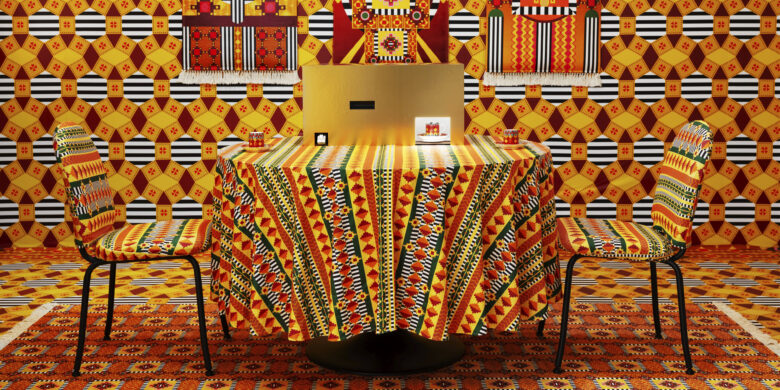
Rethinking the “A” in A.I. as “Ancestral” instead of “Artificial,” Mashinka Firunts Hakopian looks to her Armenian roots. Training an A.I. in the art of tasseography  divination through the reading of tea leaves or coffee grounds) with One Who Looks at the Cup: Querent / Բաժակ նայող, 2024-2026, Hakopian and her collaborators – Dahlia Elsayed, Andrew Demirjian, and Danny Snelson – invite museum visitors to have their coffee grounds read by A.I and to think about who is shaping A.I. and with what kind of intelligence and biases.  The large language model for the A.I. in the work includes Armenian poetry, oral histories, and transcripts of coffee readings by the artist for SWANA Diasporans. The installation is set in a futurist kitchen, furnished with wallpaper, rugs, and textiles based on traditional Armenian designs combined with digital design elements.. This traditionally feminine space, a site for the sharing of coffee and spiritual knowledge passed down through generations of women, challenges the male-dominated tech sphere. Designed so that its computational technology runs on a small local device, the installation also addresses – and mitigates – the energy consumption and growing environmental impact of A.I. use. Each prediction consumes roughly 10% of the power needed to heat a small cup of coffee.

Pelenakeke Brown‘s new work Reverb, 2025–2026 looks to ancestral teachings and ruminates on the relationality between past and present. Combining traditional Samoan tapa cloth-making and Crip Theory, the artist traveled with her mother to their ancestral village to learn the art of tapa-making and to create large-scale cloths made from mulberry bark which were then printed. Brown uses digital and screenprinting technologies and the language of the computer keyboard to share Samoan stories in the visual languages of tatau (tattooing) and siapo, both of which the artist frames as indigenous writing.  The indents and >>> marks reference vae tuli (bird footprints), which are found in both tatau and siapo (Samoan painting on tapa). In the story of how Samoa was formed, a bird (the tuli) lands and an island springs forth.  The IXI marks are based on the scissor switch mechanism underneath the keys on a keyboard which are similar to traditional tatau and siapo markings. In Reverb, they reference the earthquake god sitting under the surface connected by a pillar that shakes.  Audio recordings of the beating of the bark to make the tapa will be incorporated into the installation.

In the film installation, Speculations on Capture, 2024, Morehshin Allahyari documents technological developments in Iran from astrolabes to the telegraph and the camera, that were co-opted by colonial agendas. Allahyari imagines an alternative future through the return of the earliest astrological technologies to the peoples and cultures that created them, from European museums like the Victoria and Albert Museum which have long held these instruments. This work asserts that knowledge — particularly astronomical knowledge and related technological innovations — were developed in the Middle East and North Africa region long before colonial intervention, and symbolizes the intersection of decolonial and feminist resistance past and present. 

Roopa Vasudevan’s Requiem for the Early Internet, 2022/2026,  looks back to the internet as the artist experienced it in her youth, contrasting it with today’s web .  Referencing historical plaques, the series commemorates – and eulogizes – digital spaces and tools from the 1990s and 2000s that have largely disappeared with the dominance of giant Tech monopolies. QR codes take viewers to web pages that use or recreate the  interfaces of sites like Geocities and MySpace to reflect on their importance and what we may have discarded too soon. More than a nostalgic gesture, Vasudevan, “captures the optimism of our online past,” in her words, “ in hopes that it will enable us to imagine” — and create — better possibilities for its future. Her series of 100 hand-drawn QR (Quick Response) codes, titled Slow Response I ( Drawings), 2021-2022 questions the speed and instant gratification associated with technology and our quick adoption of new technologies — and even their failures — while asking how interchangeable human and digital labor is or isn’t. 

Neema Githere invites us into rest by bringing her ongoing Data Healing Recovery Clinic into physical space for the first time as part of the exhibition. Conceived as a ritual space for repairing the psychosomatic toll of data trauma, this work references materials such as copper, water, and clay to invoke a lineage of African Indigenous wellness techne as ingredients towards repair. Drawing formal and philosophical inspiration from the Bakongo cosmogram, the installation is organized around a circular altar-structure that mirrors the liminal axis between spiritual and material worlds, known as the Kalunga Line. Titled Nikisi Net, 2026, two hammocks invite visitors to sit and contemplate the relationships they have to their devices and to A.I. while situating contemporary technology within a long history of exploitation. The installation features a durational exchange between the artist and their A.I. “Nkisi”: a re-imagining of ChatGPT as mimicry-oracle and poetic counter-intelligence. These dialogues surface the emotional and ceremonial dimensions of human–machine entanglement, complicating a dominant narrative of artificial intelligence as a neutral tool or static capitalist commodity.

Kite’s multimedia installation Wičháȟpi Wóihaŋbleya (Dreamlike Star), 2024 illustrates the artist’s relational approach to technology through Lakȟóta ontology and ethics. This work grew out of the artist’s translations of her dreams into a Lakȟóta visual language. Geometric forms, often used in women’s quilting, are at the center of a video projection shimmering with images of earth, water, stones, stars, and sky. Doubled in a mirror below, these visions create an interconnected universe that is accompanied by a constellation of stones that serves as a score. The orchestral composition responds to the relationships between land, cosmos, human, and non-human. In a 2018 essay Making Kin with Machines, Kite wrote: “Stones are considered ancestors… stones speak through and to humans, stones see and know. The agency of stones connects directly to the question of A.I., as the technology is formed not only from code, but from materials of the earth. To remove the concept of A.I. from its materiality is to sever this connection. In forming a relationship to A.I., we form a relationship to the mines and the stones.”

Amidst this collection of works is a series of online projects and resources presented on multiple monitors that share information and strategies for change and resistance, including We Refuse, We Want, We Commit: Manifestos for Creative Resistance in Technology, by Vasudevan et al, and Indigenous Protocol and Artificial Intelligence by Lewis et al, Mimi Onuoha’s People’s Guide to A.I., and numerous others. 

Technologies of Relation is accompanied by public programming that empowers audiences to interact with digital technology as an active participant, and connect traditions of making globally with digital tools. It will be augmented by a series of workshops and performances that make digital technologies more accessible, cultivating an understanding of the ways we can impact the future of technology, including: 

  • A conversation on ancient technological futures with exhibiting artists, on February 21 at 4pm.
  • A lecture performance by Taeyoon Choi with scholar and programmer Alexander R. Galloway in November 2026 that fuses a lecture with moments of collective engagement  to examine the artistic and political significance of what cannot be computed.
  • Data-healing programming with artist Neema Githere’s installation as a way to cope with the trauma that social media and online exchanges can cause.

About MASS MoCA
MASS MoCA is one of the world’s liveliest centers for making and enjoying today’s most evocative art, and is an indispensable home for artists who stretch toward what has yet to be created. From its beginnings as the major textile mill Arnold Print Works in the mid-19th century, to its days as the Sprague Electric Company in the mid-20th century, to its current iteration as a globally renowned contemporary art museum and fabrication center, the 24-acre MASS MoCA campus has a rich history of serving as an economic engine of the city of North Adams and the surrounding region. With vast galleries and a stunning variety of indoor and outdoor performing arts venues, MASS MoCA is able to embrace art in all forms. For more information visit massmoca.org or follow on Instagram at @massmoca.

Support for Technologies of Relation is provided by the Jacques and Natasha Gelman Foundation and The Coby Foundation, and a grant from Berkshire Taconic Community Foundation’s Artist’s Resource Trust.

For more information, please contact:
Jennifer Falk
Director of Communications and Content
MASS MoCA
press@massmoca.org

Kim Donica
kd@kimdonica.com

Download the press release here.

Press Images

North Adams, MA, October 1, 2025 —MASS MoCA and Hen House Studios are proud to announce the formation of a new record label, MASS MoCA Records. By establishing a new framework for record making that centers artistic creativity, museum residencies, and live music making, it will provide an alternative to the current commercial record label model for how independent music is heard, developed, and shared.

MASS MoCA Records is uniquely designed to build on the museum’s international reach and entrusted relationships with performing artists — musicians, stage-based storytellers, and sound and sonic installation creators — by marrying the expertise of Harlan Steinberger of Hen House Studios (Sunny War, Willie Nelson, Particle Kid), who is best known for his uncommonly attuned ear as a recording engineer and producer specializing in live, studio recordings. Artists selected for the new label will be an extension of the museum’s curatorial ethos and the label will not have a scheduled application process. Launched as a three-year pilot, a limited number of albums will be released each year and produced at various recording studios in the Berkshires and throughout the world.

“MASS MoCA Records is a recording and distribution collaboration born out of our shared love of music and the artists who make it,” said Kristy Edmunds, Director of MASS MoCA. “We have a long-standing, live presenting program at the museum featuring musicians, performers, and sound artists, and have supported the creation of new works and ambitious ideas since our inception. By joining forces with Hen House Studios and being able to tap into the remarkable number of music studios and intimate venues in the local area – the ingredients for a hand-made record label were all around us. I see this label as an extension of how we innovate to support the mobility of artists’ ideas and connect audiences the world over.”

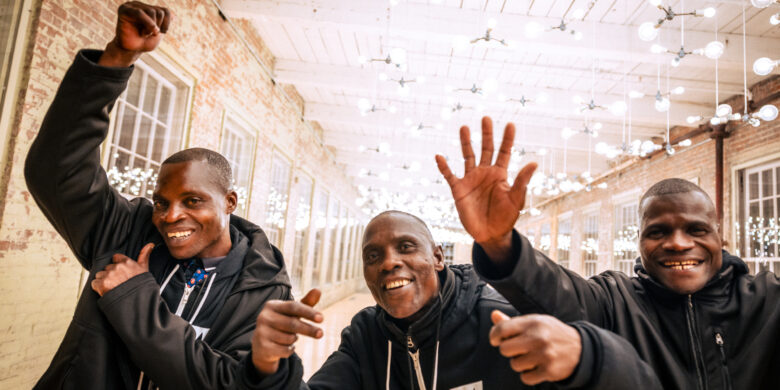
The first band to sign with MASS MoCA Records is The Kasambwe Brothers, a multi-generational band who has been making music together for almost 40 years and are grounded in the rich, musical heritage of Malawi, Africa. Through an initial collaboration between the museum and Hen House Studios in 2024, The Kasambwe Brothers traveled from Malawi to the United States for the first time to be in-residence at MASS MoCA, which included extended rehearsal opportunities, a performance with a live audience, and time at Studio 9 in North Adams, MA to record their first full-length album with Steinberger.

The first three songs from their self-titled album to be released on October 24 are out now, a preview of their vision of Malawian roots music. The first two songs, “Mtima Wanga” meaning “My Heart” and “Getu” meaning “Gertrude,” are love songs, sung in Chichewa, the national language of Malawi. The third song “Ahedi,” meaning “Head Teacher,” tells the story of a student speaking out about teachers that abuse women, and how the act of speaking up puts their studies at risk. Rooted in musical tradition, The Kasambwe Brothers are well loved on Malawian airwaves for their unflinching and courageous take on injustices facing their community everyday.

More releases will follow in 2026 from MASS MoCA Records, recording predominately in-person in the Berkshires under Steinberger’s stewardship, including cutting-edge Los Angeles jazz artists Black Nile (release date TBA). Born and raised in the Inglewood neighborhood of Los Angeles, the brothers came up in LA’s red hot jazz scene, rubbing shoulders with elder legends as well as next gen stars like Kamasi Washington and Thundercat.

“Hen House Studios has been producing, releasing, and marketing contemporary artists since 2001 with a shared artist-centered ethos with MASS MoCA. By working together, the label will help artists reach a larger audience,” said Steinberger. “Though technology today can work wonders, the digital world has de-humanized us. I believe in an older-world method that emphasizes the magic of a band making music together in one room, playing off the creativity of the moment. The humanistic approach creates a deeper emotional listener experience that can not only be heard, but also felt.”

About Hen House Studios Based in Los Angeles’ Venice Beach, Hen House Studios is an acclaimed recording studio helmed by record engineer and producer Harlan Steinberger. Known for his ability to record albums live on-the-floor and to encourage captivating performances from artists at his studio, Steinberger has made a name for himself working closely with artists like Willie Nelson, Particle Kid, Sunny War, Rocky Dawuni, and more. Since 2024, Steinberger has been traveling to Malawi to record artists across the country. Through the work of the Jacaranda Foundation, an organization that works with children and families devastated by the HIV/AIDS epidemic, Steinberger was connected to The Kasambwe Brothers and many other rising Malawian artists. For more information visit henhousestudios.com or follow on Instagram at @henhousestudios.

About MASS MoCA
MASS MoCA is a contemporary art museum that emphasizes bold creative exploration and fosters surprising connections between people every single day. It upholds artistic freedom and is an indispensable home for artists who stretch toward what has yet to be created. From its beginnings as the major textile mill Arnold Print Works in the mid-19th century, to its days as the Sprague Electric Company in the mid-20th century, to its current existence as a globally renowned, contemporary art museum and fabrication center, the MASS MoCA campus has a rich history of serving as an economic engine of the City of North Adams and the surrounding region. With vast galleries, artist studios and a variety of indoor and outdoor stages, MASS MoCA is able to embrace art in all forms. For more information visit massmoca.org or follow on Instagram at @massmoca.

For more information, please contact:
Jennifer Falk
Director of Communications and Content, MASS MoCA
MASS MoCA
press@massmoca.org

Devon Léger
HearthPR, with Hen House Studios for MASS MoCA Records

devon@hearthmusic.com

Download the press release here.

On view December 6, 2025 – Winter 2026
The Robert W. Wilson Building (B6)
Press Images

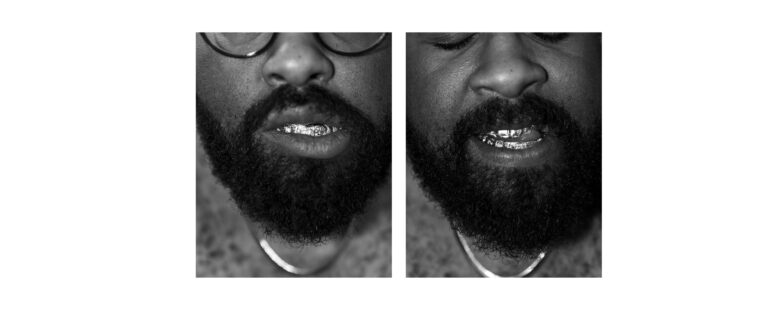
North Adams, MA, August 25, 2025 — MASS MoCA is pleased to present Zora J Murff: RACE/HUSTLE, curated by Terence Washington and the next exhibition to premiere as part of MASS MoCA’s Curatorial Exchange Initiative. RACE/HUSTLE aims to demonstrate, through photographs, collages, and, for the first time, installation works, that the pursuit of liberation is, in part, a struggle against a desire for what merely mimics it.

Murff makes photographs, assemblages, videos, and text works that examine physical, psychic, and political violence, the rhythms and resonances of oppression throughout history and into the present, and the harmful desires that our visual culture cultivates. Murff is particularly attentive to the structures of state violence. His project for MASS MoCA invites viewers to examine how systems of domination interlock and how their injurious effects are normalized and made invisible in everyday life.

“Zora specializes in photo-based works that confront viewers with sometimes difficult truths about Black life in the United States,” says CEI fellow and guest curator Terence Washington. “Increasingly, he assembles found imagery and text in knotty, associative collages, and RACE/HUSTLE will feature these hallmarks as well as sculpture and the artist’s’s first foray into participatory art. The confrontation remains.”

The Perfect Slave (after Jared Sexton) (2022) is a glitchy collage of President Barack Obama’s official headshot that makes him look like a masked bandit. In Gas Money (Affirmation #1) (2019), Andrew Jackson peeks out from a folded $20 bill being passed from one Black hand to another. One of two participatory works, Master’s Tools/Master’s House (Exclusion and Extraction) (2025), bluntly signifies how the art museum itself is part of the cultural arm of white supremacy and state power. RACE/HUSTLE reminds us that race, capital, and imperialism shape much of our relationships to one another and ourselves. At the same time, they are not absolutely powerful. What does it take to resist? What does it take to desire to resist?

“Zora is not interested in embracing the flag to secure the bag,” continues Washington. “RACE/HUSTLE brings together photographs, sculpture, participatory work, and didactic installation to argue that Black people have been given a limited — and limiting — set of proposals for finally getting free. At the same time, we ask a question that implicates us all: if you knew you had the tools and the information to get free, would you really want to do it?”

About the Artist

Zora J Murff (b. 1987) is an Oregon-based artist and educator interested in liberation from anti-Blackness. He uses his creative practice to explore the politics of racialization using provocative imagery and practices photography expansively, stretching it across disciplines to create associative or implied images. He strives to speak plainly about visual culture and its entanglement with race, capitalism, and other forms of hierarchical oppression.

Murff has created multiple books of his work including his latest monograph, True Colors (or, Affirmations in a Crisis) published by Aperture Foundation. His work has been exhibited and collected widely by institutions like the Museum of Modern Art, LACMA, Studio Museum in Harlem, and the V&A Museum. In 2023, Murff was named an International Center for Photography Infinity Award Winner.

About the Curatorial Exchange Initiative (CEI)

Zora J Murff: RACE/HUSTLE, curated by Terence Washington, is part of MASS MoCA’s Curatorial Exchange Initiative (CEI), an exploratory pilot for how contemporary museums work collaboratively with curators and artists, whose diverse practices and knowledge can be exchanged, supported, and deepened. CEI invites six fellows, including independent and institutionally-based curators working in the United States and Puerto Rico, to realize curatorial projects at MASS MoCA the first of which, Steve Locke: the fire next time, opened in 2024. As part of the program, CEI fellows receive the support of MASS MoCA’s curators, art fabrication and public programs teams, and with other key staff to realize exhibitions that will be mounted at, and supported through, MASS MoCA over the next five years. Among the defining features of the fellowship is its emphasis on curatorial exchange — intellectual, experiential, cultural, interpersonal, and institutional. MASS MoCA provides direct support for research, travel, residency, and commission/studio time for the artists each fellow is working with, and an annual stipend for the fellows that spans a two to three year period. The six fellows are Ryan N. Dennis, Marissa Del Toro, Evan Garza, Michy Marxuach, Risa Puleo, and Terence Washington.

Terence Washington is a writer and curator living in Philadelphia and studying at Princeton University. He completed his master’s degree in art history at Williams College before working with the National Gallery of Art, the NXTHVN residency, the Museum of Fine Arts, Boston, and the Free Library of Philadelphia.

About MASS MoCA
MASS MoCA is one of the world’s liveliest centers for making and enjoying today’s most evocative art, and is an indispensable home for artists who stretch toward what has yet to be created. From its beginnings as the major textile mill Arnold Print Works in the mid-19th century, to its days as the Sprague Electric Company in the mid-20th century, to its current iteration as a globally renowned contemporary art museum and fabrication center, the 24-acre MASS MoCA campus has a rich history of serving as an economic engine of the city of North Adams and the surrounding region. With vast galleries and a stunning variety of indoor and outdoor performing arts venues, MASS MoCA is able to embrace art in all forms. For more information visit massmoca.org or follow on Instagram at @massmoca.

MASS MoCA’s Curatorial Exchange Initiative (CEI) is generously supported through a leadership gift from Sarah Arison and the Arison Arts Foundation, Michi Jigarjian, Denise Sobel, the Teiger Foundation, and Anders Schroeder. Additional support is provided by the Director’s Catalyst Fund, with generous contributions from Greg and Anne Avis, Kelly and Bill Kaiser, Steve and Lisa Jenks, Bob Gold, and an anonymous donor.

For more information, please contact:
Jennifer Falk
Director of Communications and Content
MASS MoCA
press@massmoca.org

Download the press release here.
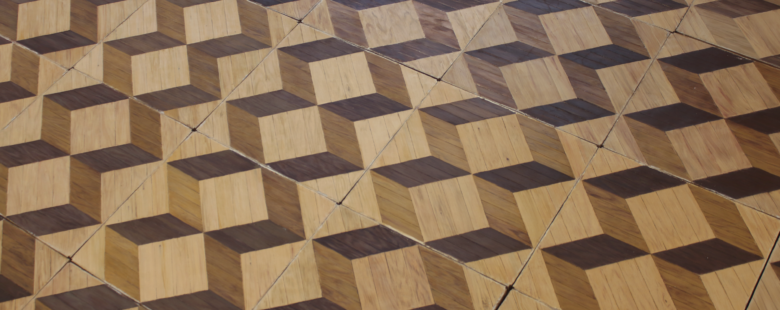
Jimena Sarno’s Rhapsody blends craft traditions, sonic compositions, and film as an expression of human interdependence for the artist’s first major solo museum exhibition.

On view October 18, 2025–February 2027
MASS MoCA Building 4.2
Opening Celebration, Saturday, October 18 at 5:30pm

Press Images

Press Release (English)
Comunicado de Prensa (Español)

North Adams, MA, July 1, 2025 — MASS MoCA is pleased to present Jimena Sarno: Rhapsody, the artist’s first major solo museum exhibition, which engages craft traditions to imagine a future built on values of collectivity, reconfiguration, and repair. For Rhapsody, Sarno collaborated with over 20 artists, teachers, and makers, many of whom are from the Global South, combining filmmaking, sound, and sculpture with contemporary and traditional craft practices to illuminate how sharing time, space, and resources can deepen solidarity within a global context of extreme violence, fragmentation, and destruction.

“Over the past five years, Jimena and I have thought together about the ways that reconfiguration, repair, and solidarity can be used to navigate and translate across borders. We hope that visitors and the community will be inspired by the makers and networks represented in Rhapsody to remember their interconnectedness as they build the future together,” says Alexandra Foradas, former MASS MoCA curator and presently the Haskell Curator of Modern and Contemporary Art at the Princeton University Art Museum. 

 “It is wonderful to welcome Jimena Sarno back to MASS MoCA and to be able to share more of her practice with our visitors, having first presented her work in the group exhibition Kissing Through a Curtain in 2020-2022. We are also thrilled to welcome back as guest curator Alexandra Foradas,” states Susan Cross, Interim Director of Visual Arts, MASS MoCA.

Informed by travel to Perú and Argentina (where she was born) within the context of Andean cosmology and tradition, the central installation in the exhibition features a group of objects made using a variety of techniques including weaving, felting, woodworking, and ceramics that rely on bodies of knowledge passed from maker to maker. These objects are tools — at once utilitarian and utopian — designed for a hoped-for, not-so-distant future built on solidarity and mutual care. This assemblage of domestically-scaled, speculative tools made by more than a dozen artists underscores the significance of interdependence and collectivity. Displayed on portable tables, these objects cast shadows across a 100-foot-long film projection interlacing footage of Sarno learning to weave with the same landscapes that were the backdrop to her process.

“The loom functions as a narrative space, and weaving as a metaphor for the interconnectedness of all beings. For Rhapsody, I have transposed this generative space into a monumental projection, in which film montage echoes the weaving process.” Sarno’s film is accompanied by changing soundscapes composed by collaborators including Bergsonist, Dirar Kalash, Mhamad Safa, and Val Jeanty,” notes Sarno.

Additionally, Sarno’s exhibition brings together three other works: two installations incorporating film, sound, and sculpture titled A Life in the Forest and Las Tres Gracias, and text/ile (textile and text) library. 

A Life in the Forest, commissioned for Sarno’s exhibition at MASS MoCA, centers on the conservation of a small mother-and-child pair of deer, sculpted in wood by the artist’s late uncle in the 1950’s. Sarno has collaborated with conservators to repair the original wooden sculptures, using 3-D scanning, wood carving, and gilding to replace the missing ears and legs. It includes a sonic composition sampled from the instrumental soundtrack for a musical based on Bambi (1942) by Walt Disney Productions, and a film shot in Super 8 documenting the repair process for the wooden deer in Argentina’s Bosque de Los Arrayanes (known in english as the Myrtle Forest) which also inspired Disney. The sculpture’s deer motif can be traced back to Bambi: A Life in the Forest, a 1923 novel allegorizing the ills of fascism by Felix Salten. The installation also features a host of additional objects repaired by community members over the course of a series of repair workshops. 

The work entitled Las Tres Gracias interrogates Western civilization’s myth of democracy through creation myths and Third World poetry. Receiving its name from a missing neoclassical sculpture by Italian sculptor Antonio Canova, Las Tres Gracias — which once stood in the botanical gardens of Buenos Aires and the artist’s subsequent search for it — depicts the three daughters of the Greek god Zeus, believed to bestow beauty, mirth and grace upon humanity. The installation adopts the structure of Greek tragedy, with felted speakers cast as actors playing the Graces, and a crowd of eight suspended speakers standing in for the chorus. The Graces sing operatic stories that weave South American creation myths, colonial plunder, extractivism, and the collective responsibility of living in just relation with all beings. The installation also features a two-channel video, created by Sarno in Super 8 film, capturing scenes from various botanical gardens — a libretto in which Sarno interweaves fragments of texts written by South American revolutionaries and journalists, all of whom were poets; vocal music by American composer and vocal artist Molly Pease; and percussion improvisations composed and performed by Italian percussionist Valentina Magaletti.

The text/ile library contains a collection of writings and textiles that provide context for and have influenced Sarno’s practice. Drawing on the Latin word “texere,” meaning “to weave,” the space will include writings by Anni Albers, Denise Y. Arnold and Elvira Espejo, Eduardo Galeano, José Esteban Muñoz, and others, alongside textiles from Sarno’s own collection. The library will be housed in an open wood-framed structure matching the dimensions of the artist’s home studio, set at a slight angle to the floor, offering a space of gathering in the spirit of conversation, collaboration, questioning, and exploration for visitors. 

In the spirit of collectivity that Rhapsody encourages, Sarno has invited a group of collaborators to contribute films that resonate with the themes of the exhibition to the installation’s adjacent screening room. The first film to be screened will be Jumana Manna’s (Palestinian b. 1987) Wild Relatives (2018), which documents the transfer of a seed library from Aleppo, Syria, to the Bekaa Valley, Lebanon in 2012, a move necessitated by the Syrian revolution-turned-war. Films by Basma Al Sharif and Andres DeNegri will also be screened.

A series of public programs will accompany the exhibition over the course of its run, including repair workshops focusing on textiles, wood, and more. The first exhibition-related event will be a public discussion with Sarno and Foradas on Saturday October 18 at 4:00pm, Club B-10, MASS MoCA, shortly before the opening celebration from 5:30–7:30pm. 

Collaborators creating object-based works for the exhibition include Candelaria Aaset, Afous Gafous Collective, Claudia Alarcon, Milagros Colodrero, Rosendo Diaz, Brahim El Mansouri, Fadel Tighedouine collective, Fidela Flores, Local Industries, Josefina Puch, Lucia Rainieri, Eduardo Sarno, Tizi Nougdal Collective, Ramyar Vala, Celeste Valero, and Vestigios del Futuro, among others. New works by these collaborating artists will be added in four phases over the course of the exhibition.

The exhibition title references the multiple definitions of “rhapsody,” including a musical composition characterized by improvisation, an epic poem, and the word’s Greek root, “rhapsode,” meaning someone who stitches or sews songs together. The collaborations and ongoing reconfigurations of Sarno’s installation, including the addition of new works over the course of the exhibition, contribute to the rhapsodic sense of weaving together changing elements that remain in flux, mobile and uncertain. The contributions by Sarno, her collaborators, and community members emphasize our shared responsibility for repairing a broken down present as we defend our future. 

About the Artist
Jimena Sarno is an interdisciplinary artist and educator born in Buenos Aires, Argentina, and based in Los Angeles. With a focus on the sensorial and affective experiences shaped by political subjecthood, she works across a range of media including installation, sound, video, text, and sculpture. Her work has been exhibited in solo and group exhibitions at MASS MoCA (Kissing through a Curtain, 2020); Pitzer College Art Galleries, Claremont, CA; REDCAT, Los Angeles, CA; Vincent Price Art Museum, Monterey Park, CA; Clockshop, Los Angeles, CA; 18th Street Arts Center, Santa Monica, CA; LACE, Los Angeles, CA; Visitor Welcome Center, Los Angeles, CA; Museum of Latin American Art, Long Beach, CA; Mistake Room, Los Angeles, CA; Human Resources, Los Angeles, CA; PØST, Los Angeles, CA; UCI Contemporary Art Center, Irvine, CA; Grand Central Art Center, Santa Ana, CA; Control Room, Los Angeles, CA; San Diego Art Institute, CA; Luminary, St. Louis, MO; and Centro Galego de Arte Contemporánea de Santiago De Compostela, Spain; among others. Her work has been supported by the California Arts Council Individual Fellowship, the California Community Foundation Fellowship for Visual Artists, the Foundation for Contemporary Art Emergency Grant, and she was 2023–24 Lucas Artist Fellow in Visual Arts at Montalvo Arts Center, Saratoga, California.

About MASS MoCA
MASS MoCA is one of the world’s liveliest centers for making and enjoying today’s most evocative art, and is an indispensable home for artists who stretch toward what has yet to be created. From its beginnings as the major textile mill Arnold Print Works in the mid-19th century, to its days as the Sprague Electric Company in the mid-20th century, to its current iteration as a globally renowned contemporary art museum and fabrication center, the 24-acre MASS MoCA campus has a rich history of serving as an economic engine of the city of North Adams and the surrounding region. With vast galleries and a stunning variety of indoor and outdoor performing arts venues, MASS MoCA is able to embrace art in all forms. For more information visit massmoca.org or follow on Instagram at @massmoca.

Support for Rhapsody is provided in part by The Coby Foundation.

For more information, please contact:
Jennifer Falk
Director of Communications and Content
MASS MoCA
press@massmoca.org


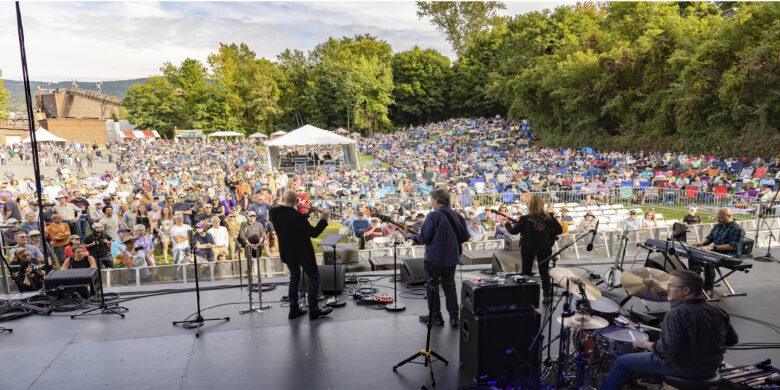
FreshGrass | North Adams 2025. Photo: Doug Mason

FreshGrass, MASS MoCA’s annual three-day festival of bluegrass and roots music, announces its initial 2025 lineup, featuring Greensky Bluegrass, Cimafunk, Lee FIelds, Kitchen Dwellers, Jaime Wyatt, Sierra Hull, Alison Brown, The Brothers Comatose, Swamp Dogg, East Nash Grass, Mireya Ramos & the Poor Choices, El Laberinto del Coco, Mr. Sun, Reed Foehl, Michael Daves & Jacob Jolliff, Allison de Groot & Tatiana Hargreaves, and Catfish in the Sky.

Press Release

Images

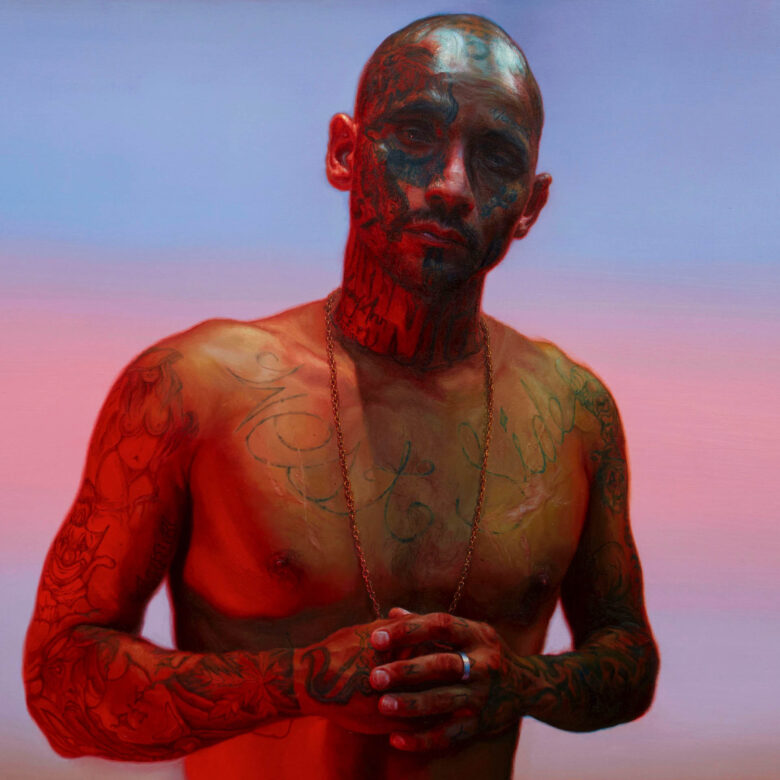
MASS MoCA is pleased to present Vincent Valdez: Just a Dream…, the artist’s first museum survey, including previously unexhibited and new bodies of work. Co-organized by MASS MoCA (Massachusetts Museum of Contemporary Art) and Contemporary Arts Museum Houston (CAMH). Spanning over two decades of his work, from early career drawings to recent monumental portraits, Just a Dream… cements Valdez as one of the most important American painters working today — imaging his country and its people, politics, pride, and foibles. The first iteration of the exhibition is currently on view at CAMH through March 23 before opening at MASS MoCA on May 24, 2025.

Press Release (English)

Press Release (Spanish)

Images

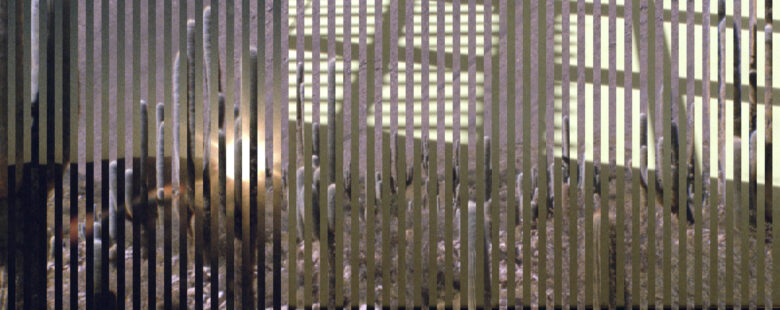
Belly of a Glacier

MASS MoCA (Massachusetts Museum of Contemporary Art) in
North Adams, in collaboration with The Williams College Museum of Art (WCMA), will present
the exhibition Ohan Breiding: Belly of a Glacier, a series of photographs and video that
ruminates on the imminent loss of the Rhône glacier, amplifying the current state of climate
emergency while expressing the intimate entanglement of human and environmental
well-being. The exhibition is on view at MASS MoCA from February through December 14,
2025.

Press Release

Images

For Immediate Release
20 October 2016
Contact: Jodi Joseph
Director of Communications
413.664.4481 x8113
jjoseph@massmoca.org

Star of Stage and Screen: Eisa Davis 

“Fills every corner of the room…. open faced and open hearted.”
— The New Yorker

NORTH ADAMS, MASSACHUSETTS — Eisa Davis — an acclaimed actress you might recognize as Heather Dunbar’s Chief of Staff, Cynthia Driscoll, on House of Cards — is also an award-winning playwright and a formidable singer and songwriter. She sits down at the piano in MASS MoCA’s Club B10 for an intimate evening of intense, minimalist soul on Saturday, November 12, at 8pm.

Davis is a recognizable face in the world of performance. In addition to House of Cards, she has had a praiseworthy career on stage and in the studio. She has been awarded numerous fellowships; was a Pulitzer Prize finalist for her play, Bulrusher; was awarded the prestigious Herb Alpert Award in Theatre; and was a resident playwright at New Dramatists, where she won the Helen Merrill Award and the Whitfield Cook Award. After releasing her first album, Something Else, to critical acclaim in 2007, it was clear that Davis’ passion and spirit were engrained in her music career as well.

Calling to mind fellow multi-hyphenate talent Audra McDonald, the world is waking up to Davis’ undeniable, poly-platform grace and skill. “Watching Davis reveal her soul through her songs, and also embody the souls of different characters, is like peeling back the petals of a rare flower,” PopMatters notes. “Her lyrics mirror the full gamut of love, relationships, and life experiences. By stripping emotions to their essence, then illuminating them in powerful stories, Davis provides a mirror for audience members to see their own beauty in her songs.” With her subtle but strong minimalist-soul sound, if the comparisons to McDonald aren’t yet coming in droves, surely they soon will. The star of the stage, Eisa Davis, joins us in MASS MoCA’s Club B10 on Saturday, November 12, at 8pm.

Join us before the show when Lickety Spit, MASS MoCA’s café, serves up crisp salads, hearty soups, and lip-smacking pub fare. A full bar serves Bright Ideas Brewing beers and Berkshire Mountain Distillery spirits. Tickets are $10 for students, $16 advance, $22 day of, and $30 preferred. Tickets for all events are available through the MASS MoCA box office located on Marshall Street in North Adams, open 11am to 5pm every day except Tuesdays. Tickets can also be charged by phone by calling 413.662.2111 during box office hours or purchased online at massmoca.org.

Images
High-resolution images of MASS MoCA’s fall 2016 events are available through this link: bit.ly/mmfall2016

About MASS MoCA
MASS MoCA is one of the world’s liveliest (and largest) centers for making and enjoying today’s most important art, music, dance, theater, film, and video.

Gallery admission is $18 for adults, $16 for veterans and seniors, $12 for students, $8 for children 6 to 16, and free for children 5 and under. Members are admitted free year-round. The Hall Art Foundation’s Anselm Kiefer exhibition is open seasonally, spring – fall. For additional information, call 413.662.2111 x1 or visit massmoca.org.

Hours
11am to 5pm, closed Tuesdays

Download the Eisa Davis press release

  • 1
  • 2
  • Next Page »

TAKE PART

Newsletter sign-up
Mass MoCA Instagram Mass MoCA Facebook Mass MoCA YouTube
LOGIN ABOUT HOST EVENTS / OFFICE SPACE PRIVACY POLICY Consent Policy

MASS MoCA

1040 MASS MoCA WAY
North Adams, MA 01247

413.662.2111

info@massmoca.org

Copyright © 2025 Massachusetts Museum of Contemporary Art

Barr Foundation Massachusetts Office of Travel & Tourism
Consent Preferences