
Public Program
- Friday, July 25, 10am
- $60
- B4.2
Join us for a Textile Repair Workshop and contribute to Jimena Sarno’s installation Life in the Forest. Learn more about the exhibition here.
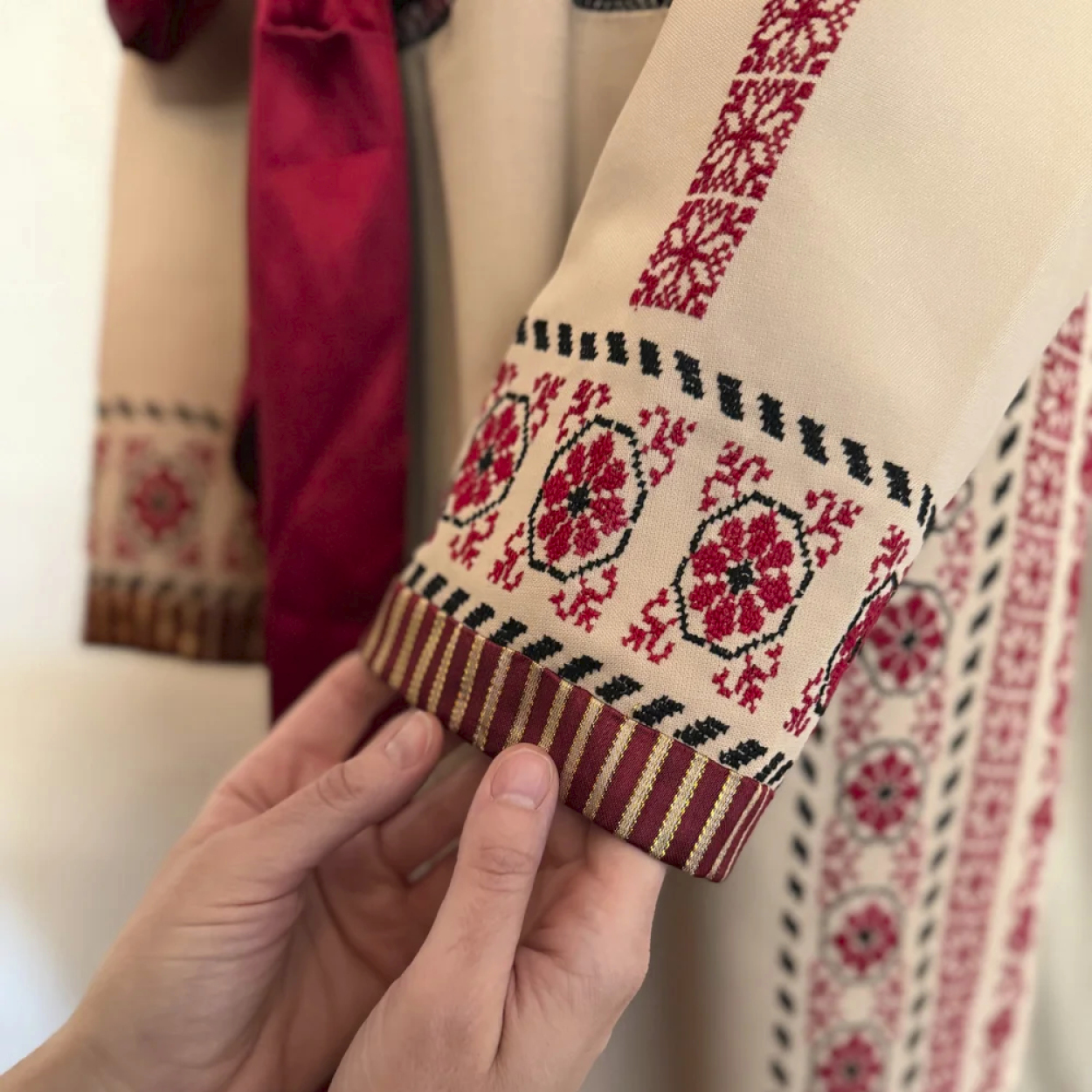
This two-day workshop introduces tatreez — traditional embroidery from the eastern Mediterranean — as a form of visible, structural mending. Participants explore how Palestinian, Syrian, Jordanian, and Lebanese embroidery practices have historically combined decoration with repair, emphasizing reuse, improvisation, and sustainability. Through hands-on instruction, students learn foundational stitches, create an embroidered patch using a traditional Palestinian motif and waste canvas, and apply it to a textile in need of repair.
The workshop focuses on high-contrast, hand-sewn visible mending inspired by nineteenth- and twentieth-century regional practices, celebrating expressive, colorful, imperfect, and durable outcomes. By the end of the class, participants will complete a visible mend and gain skills to continue repairing garments independently while engaging respectfully with living cultural traditions.
Registration for this workshop is a two step process. First, please fill out a registration form here:
Click here to access the application form.
After we assess the garment or textile that you would like to repair through the application form, MASS MoCA and the instructor (Wafa Ghnaim) will determine if the repair is doable with this instructor during the allotted time frame. If so, the applicant will be invited to register. The workshop is limited to 15 participants.
This workshop is featured as part of Jimena Sarno’s exhibition, Rhapsody. Participants have the opportunity to add objects to the exhibition as part of Sarno’s installation: Life in the Forest, which is gradually built with the accumulation of objects restored in these repair workshops. After the run of the show, you will be required to pick up your repaired objects.
This workshop centers tatreez as it has been historically practiced on garments from Palestine, Syria, Jordan, and Lebanon. Priority will be given to participants seeking to repair or work on garments connected to their own cultural, family, or regional heritage. Applicants proposing other repair projects are welcome and will be considered on a case-by-case basis.
Participants are asked to review the Tatreez Institute’s Community Guidelines prior to applying. The guidelines address questions of cultural appropriation, citation, and heritage preservation.